



A tap that suddenly feels wobbly or starts dripping can be frustrating, especially when you cannot tell whether it needs a simple adjustment or professional attention. But here’s something worth knowing: a loose tap handle and a leaking tap are two different plumbing problems, even though they can sometimes occur together.
If you’re looking for Leaking Tap Repair Chatswood, understanding the warning signs can help you identify the issue before it causes further water damage.
How Do You Tell a Loose Tap Handle from a Leaking Tap?
The easiest way is to observe what happens when you turn the tap on and off.
| Signs | Loose Tap Handle | Leaking Tap |
| Handle movement | Wobbles or feels unstable | May feel normal or stiff |
| Water dripping | Not necessarily present | Commonly drips from the spout |
| Water around the base | Usually absent | May indicate damaged seals |
| Common cause | Loose fixing screw or worn handle connection | Damaged washer, O-ring or cartridge |
| Required repair | Tightening or replacing handle components | Replacing faulty internal parts |
If the handle turns too much but there is no excess leakage of water, you should try to tighten the securing screw. However, in case of persistent dripping after turning off the tap, it is necessary to think about internal sealing problems.
What Causes a Tap Handle to Become Loose?
There are several reasons why a tap handle becomes loose:
- Loose fixing screw: The handle’s constant use can cause the securing screw to become loose.
- Worn internal elements: Age and regular movement can damage the connection of the handle.
- Corrosion: Moisture can impact metal elements and cause the loosening of the handle.
- Damaged handle mechanism: Worn or damaged handles require replacement.
Neglecting a loose handle can lead to difficulty of using the mechanism and damage other parts of the mechanism.
Why Does a Tap Keep Dripping After Being Turned Off?
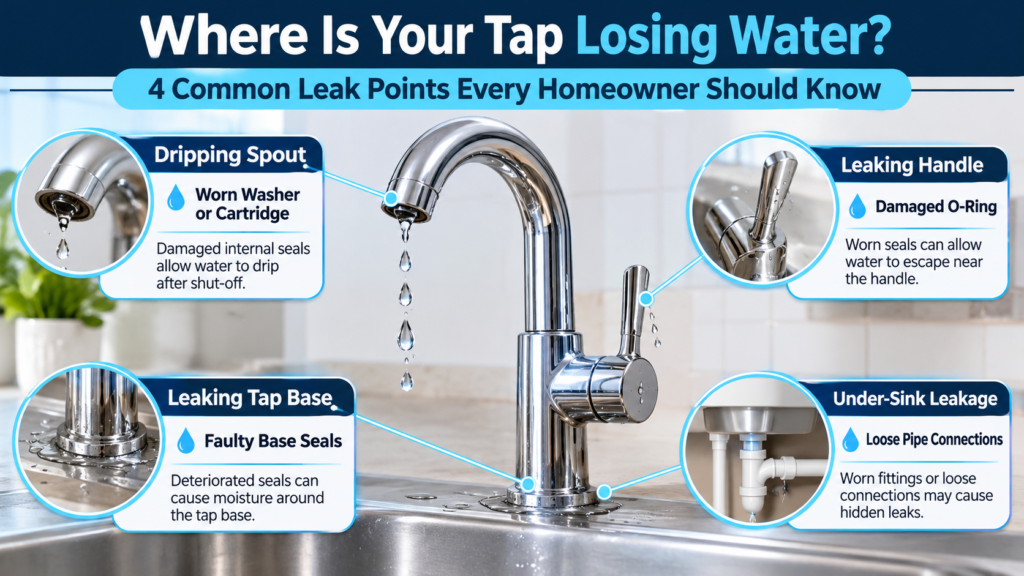
Usually, the reason for leakage is a problem with the internal seal of a tap.
There could be several reasons:
- Worn-out washers: Old-fashioned taps have rubber washers which get worn out in the course of time.
- Broken O-rings: Those seals could result in a leakage of water around the tap or around the handle of the tap.
- Worn cartridges: Modern mixer taps tend to leak due to worn cartridges.
- A rough or corroded valve seat: That might cause problems with the sealing of the washer.
It depends on the model and location of leakage on how you should deal with the problem.
Can a Loose Tap Handle Cause a Leak?
Yes, but not always. The looseness of the handle could lead to extra pressure on some connections inside the tap, resulting in some wear of components. However, usually, a leak has another reason: a broken washer, O-rings, or cartridge.
If the handle feels loose and water is appearing around its base, both issues should be inspected rather than assuming tightening the handle will solve everything.
When Should You Call a Professional Plumber?
Contact professionals if you:
- Can’t fix the dripping tap using simple measures.
- There is leaking near the handle or under the sink.
- It becomes hard to move the handle.
- Notice any signs of corrosion or damaged fittings.
- The previous repair job failed to fix the leaking tap.
If you need any assistance with a Leaking Tap Repair in Chatswood, getting an expert opinion will enable us to determine the real problem causing this issue.
Same Day Home Services offers plumbing services to help you with these kinds of issues. Visit our site to see our leaks and waterproofing services.
Frequently Asked Questions
1. Is a loose tap handle a plumbing emergency?
Usually not. However, if it is accompanied by water leakage or damaged fittings, arrange an inspection promptly.
2. Why does my tap leak only when I turn it on?
A worn O-ring, damaged spindle seal or faulty cartridge may allow water to escape when the tap is operating.
3. Can tightening a tap handle stop a leak?
Only if the problem is related to a loose handle connection. Internal washer, cartridge or seal damage requires a different repair.
4. Should I repair or replace a leaking tap?
Minor internal faults can often be repaired by replacing individual components. However, extensive corrosion, damaged tap bodies or recurring faults may make replacement more practical.
5. How can I prevent tap leaks from returning?
Avoid forcing handles, address minor leaks early and arrange periodic plumbing inspections to identify worn components.
Final Thoughts
Distinguishing between the two can save you a lot of time and ensure that there will be no need for any replacement. Whatever the problem with the tap may be, whether a loose handle, leakage, or even moisture around the base, recognising the cause is always the first step in solving the problem.