




A leaky balcony does not just mean annoyance for you. While an insignificant wet spot, damaged grout, or water collecting after rain might seem like something that can be easily managed, prolonged penetration of moisture into your balcony could become a serious issue that would result in damage to your tiles, interior walls, or even water stains on your ceiling.
If you have observed the warning symptoms of potential issues with your balcony, the knowledge of when to use the Balcony Leak Repair service in Parramatta will allow you to avoid any further trouble.
Let’s find out the most frequent signs of balcony leaks, their causes, and when to consider using professional waterproofing services.
7 Signs Your Balcony Needs Professional Waterproofing Repairs
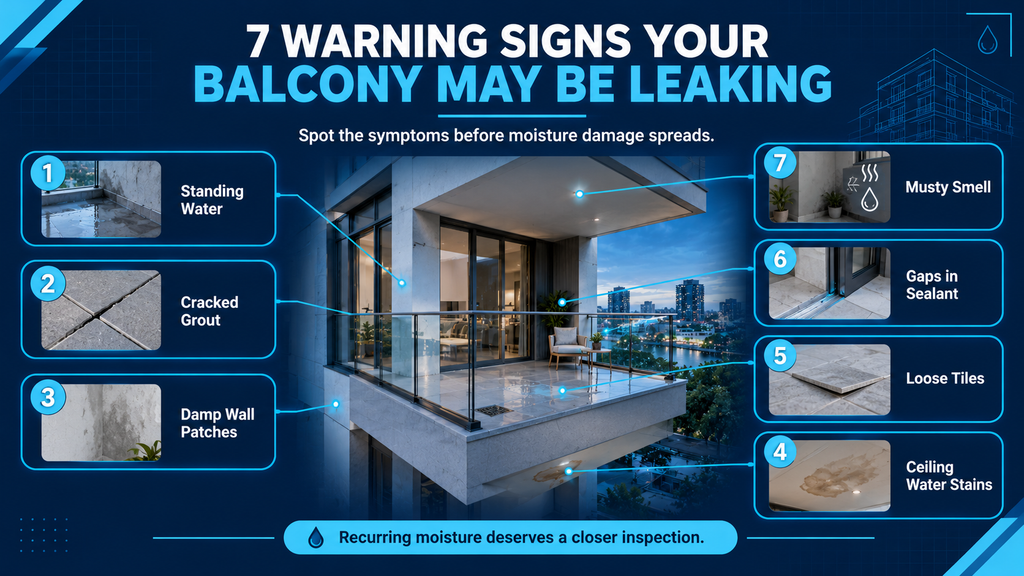
Here are seven common warning signs that may indicate a balcony waterproofing problem.
1. Water Keeps Pooling on the Balcony Floor
Does water stay on your balcony long after the rain stops? Some moisture is acceptable; however, constant water puddles can show that there are some drainage problems, an uneven floor, or even closed drainage holes.
Constant water stays moist for more time, which means that there is a higher chance that it penetrates into weak joints or into the waterproofing layer.
What to look for: Water that collects next to balcony doors, in corners, on walls, or in drainage outlets.
What should you do? Clear all accessible drainage channels and watch for affected spots. If the problem persists, then you can have some drainage or waterproofing issues, and it is better to contact a specialist.
2. Cracked or Missing Grout Between Tiles
The grout is a material that fills the spaces between balcony tiles, but due to the weather conditions, movement, and aging, grout can crack or even become loose, which allows water to go underneath the tiled surface.
However, grout does not necessarily mean that the balcony is waterproof. There is always a waterproofing membrane under the tile that protects against water.
What to look for: Cracks, missing grout, growing gaps, or places where grout constantly gets damaged after repair.
If these signs keep returning, investigate the underlying cause rather than repeatedly filling the gaps.
3. Peeling Paint or Damp Patches on Nearby Walls
Have you noticed paint bubbling, plaster becoming discoloured, or damp patches appearing around the balcony entrance? These changes may indicate moisture moving through wall junctions, door thresholds, or adjacent building materials.
While condensation and plumbing leaks can cause similar symptoms, balcony waterproofing problems should be considered when the affected area is close to an exposed balcony.
What to look for: Peeling paint, blistering surfaces, musty smells, or persistent dampness around balcony-facing walls.
Early investigation can help determine whether the moisture comes from the balcony or another source.
4. Water Stains on the Ceiling Below
One of the clearest warning signs is water appearing on the ceiling beneath a balcony. Brown stains, bubbling paint, or damp patches may suggest that water is penetrating the balcony slab or surrounding construction.
The problem can become more noticeable after heavy rainfall, particularly if the waterproofing membrane has deteriorated or water is entering through vulnerable joints.
What to look for: Expanding stains, recurring damp patches, peeling ceiling paint, or dripping water below the balcony.
Do not ignore these symptoms, even if the ceiling dries out between rain showers. The visible damage may be only one part of the problem.
5. Loose, Lifting, or Cracked Balcony Tiles
Tiles that sound hollow when tapped, lift at the edges, or develop unexplained cracks may indicate problems with the adhesive, substrate, or underlying moisture conditions.
Water entering beneath tiles can contribute to deterioration, although installation defects and structural movement can also cause similar damage.
What to look for: Uneven tiles, loose edges, cracked surfaces, or sections that appear to move underfoot.
Avoid simply replacing individual tiles without investigating why the damage occurred. If the waterproofing membrane has failed, surface repairs alone may not provide a lasting solution.
6. Gaps Around Balcony Doors, Walls, or Balustrades
Balcony leaks do not necessarily originate from the middle of the floor. The water can come in through deteriorating sealant, improperly sealed door thresholds, wall junctions, or weakly secured balustrades.
Such locations are especially important because they represent connections between various building materials and can be used by moisture to gain access into the balcony space.
What to pay attention to: Contracting sealants, gaps, cracked joints, or dampness along doorframes or walls.
A professional will be able to evaluate those junctions and decide whether resealing, localized repairs, or full waterproofing is required.
7. A Musty Smell or Recurring Dampness
The presence of an unusual, musty smell can suggest the existence of moisture under the tiles, behind wall coverings, or other building materials. In some cases, you may feel it even if the floor seems dry.
Dampness repeated several times also creates favorable conditions for developing mold in such places.
What to pay attention to: Musty smells, repeated damp spots, mold appearance, or wet surfaces.
Do not forget: These signs may suggest the occurrence of leakage, but they do not necessarily prove it. Moisture identification is very important for the subsequent repair process.
What Causes Balcony Leaks in Parramatta?
Balcony leaks often occur when there is damage to the waterproofing membranes, grout or sealant, and drainage becomes blocked. In Sydney, weather changes, heavy rainfall, and exposure to the sun can also result in degradation over time.
Some other possible reasons for this could be:
- Damage to waterproofing membranes: Damage in the form of cracks and deterioration can cause water to pass through into the building structure.
- Blocked balcony drains: Water accumulation results in an extended period of exposure of moisture to the vulnerable surfaces.
- Loose joints: Loose joints in doors, walls, and balustrades can cause water to seep through.
- Degradation of construction materials: Tiles, grout, and sealants can get affected by regular exposure to natural elements.
Identifying the reason behind it is crucial since simply fixing a crack will not help.
How Is a Leaking Balcony Professionally Repaired?
The kind of repair required depends on the degree of the problem as well as the state of the waterproofing membrane already in place. The professional will advise on:
- Leak detection and inspection: Inspecting tiles, drainage points, junctions between walls, and doorways for possible water entry points.
- Repair of grout and sealants where there is local damage.
- Installation of new waterproofing membranes where the old one has failed, thus requiring removal of old finishes.
- Fixing drainage problems causing water puddles.
If you need professional and efficient Balcony Leak Repair Parramatta, the most important thing is to find out and address the cause of the problem. It is worth noting that according to NSW guidelines, drainage and proper installation of external waterproofing membranes are critical.
Can You Fix a Leaking Balcony Yourself?
Simple repairs like cleaning drains of fallen leaves may help avoid clogging. However, the use of sealant on cracked tiles will not guarantee that a faulty waterproofing layer is fixed.
| DIY Maintenance | Professional Repairs |
| Clearing accessible drains | Investigating hidden water entry |
| Monitoring visible cracks | Assessing membrane deterioration |
| Cleaning surface debris | Repairing underlying waterproofing issues |
If water is reaching electrical fixtures, ceilings, or internal walls, arrange a professional assessment promptly.
Who Can Help With Balcony Waterproofing in Parramatta?
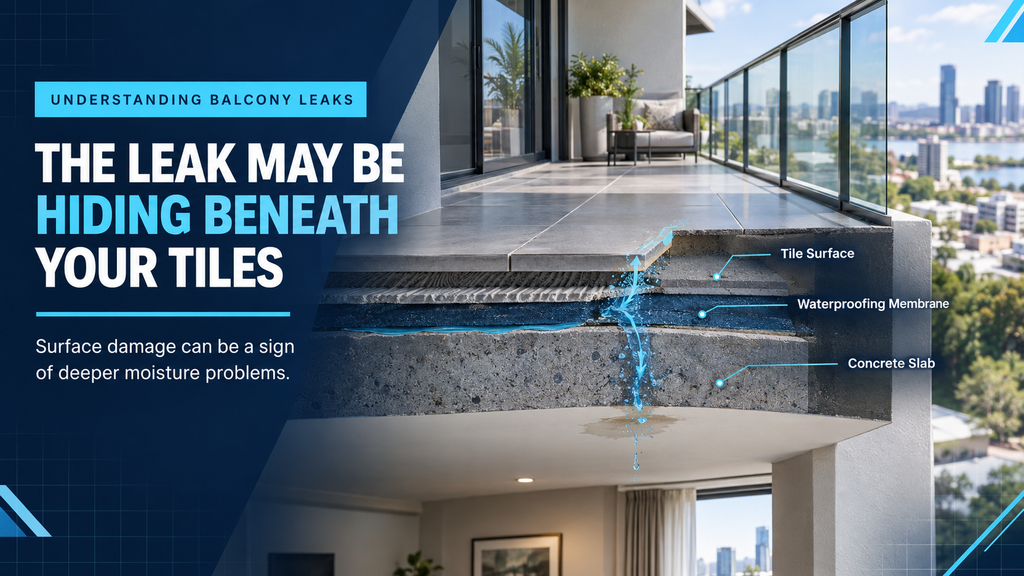
In addition, balcony leaks may get worse if the cause is not addressed. Having knowledge of the solutions that exist for fixing leaks and waterproofing the balcony will assist homeowners in Parramatta in making sound choices when it comes to protecting their balconies.
Do not allow a minor problem to turn into a major one. By investigating it early enough, you will minimize moisture damage and determine what your balcony requires.
Protect your property from moisture damage and identify the repairs your balcony actually needs.
Frequently Asked Questions
1. How do I know if my balcony waterproofing has failed?
Persistent water pooling, damp walls, loose tiles, and leaks appearing on the ceiling below can indicate a waterproofing problem.
2. Can a leaking balcony be repaired without removing tiles?
Sometimes. Localised repairs may be possible, but a failed membrane beneath the tiles may require removing the affected surface.
3. How much does balcony leak repair cost in Parramatta?
Price is dependent on the location of the leak, the extent of the water damage, accessibility, and the state of the waterproofing membrane. Contact us for consultation and pricing.
4. How can I prevent balcony leaks?
Keep drainage outlets clear, inspect grout and sealant regularly, and arrange professional repairs when you notice persistent moisture or damaged finishes.
5. Who is responsible for repairing a leaking apartment balcony?
In strata properties, responsibility often depends on whether the affected component is common property or part of an individual lot. Check your strata plan and consult your strata manager.
Final Thoughts
Leaky balconies do not happen all at once. The cracked grout, the pooling of water, the peeling paint, the loose tiles, and the wet ceiling can all give us an idea about any problems that may be happening.
Taking note of these signs will allow us to know about the possible waterproofing issues before they become bigger. Same Day Home Services operates in the areas of home maintenance and leak and waterproofing repair, which is where knowing the origin of the moisture becomes significant.
The key is simple: don’t ignore recurring signs of moisture. The sooner the underlying cause is identified, the easier it is to make an informed decision about protecting your balcony and the surrounding property.