



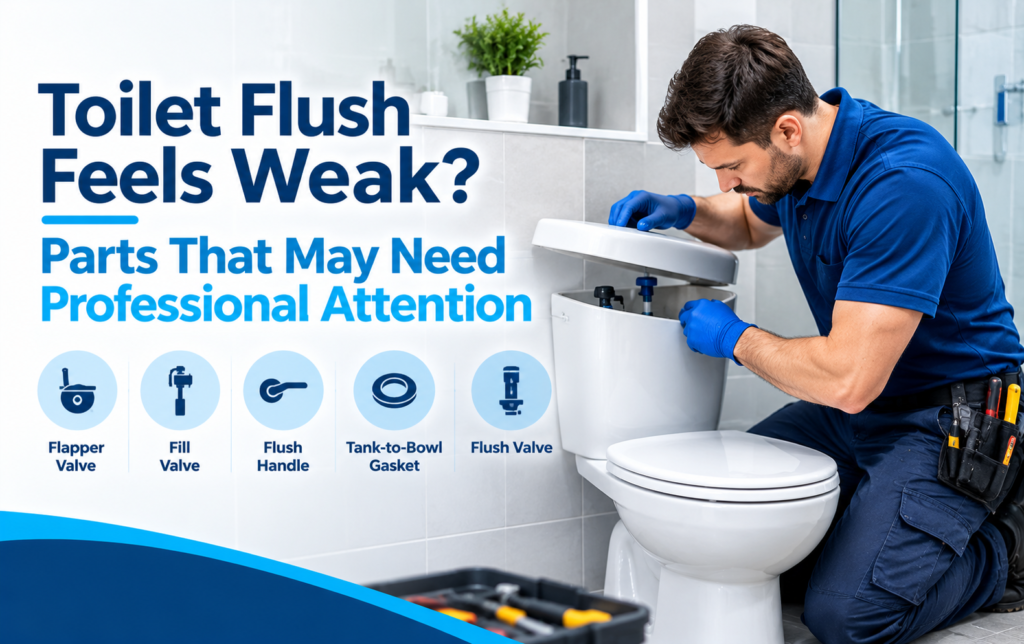
A toilet that needs two or three flushes to clear the bowl can quickly become frustrating. You may also notice that the water swirls without clearing everything or that the cistern takes longer than usual to refill. These changes can point to a problem with the flushing mechanism or another internal component.
If you are experiencing these issues at home, a professional toilet repair service in Lidcombe can help identify what is affecting your toilet’s performance. Understanding how the flushing mechanism works can also help you recognise when professional plumbing assistance is necessary.
Why Does Your Toilet Flush Feel Weaker Than Usual?
An effective toilet flush depends on the correct amount of water being released from the cistern into the bowl. When this process is interrupted, the water may not flow with enough force to clear the contents properly.
A faulty inlet valve can affect how the cistern refills, while an outlet valve problem may interfere with water release. Damaged seals and a malfunctioning dual-flush mechanism can also affect normal flushing performance.
The important thing is to identify the actual fault before replacing any components. A weak flush does not always mean the same part is responsible.
Which Toilet Parts Can Cause a Weak Flush?
Several components inside the cistern work together to complete each flushing cycle. A problem with any of them may affect how your toilet operates.
1. Cistern Inlet Valve
The inlet valve controls the flow of water into the cistern after flushing. If it fails, the cistern may refill slowly or not reach its usual water level.
This can leave less water available for the next flush, resulting in an incomplete clearing of the bowl. If you regularly notice a delay before the cistern is ready again, the inlet valve may need professional inspection.
2. Outlet Valve and Flush Mechanism
The outlet valve controls when water leaves the cistern and enters the toilet bowl. If it does not open or close correctly, the flushing cycle may become inconsistent.
A worn or damaged seal around this mechanism can also allow water to leak continuously into the bowl. You may notice water movement even when nobody has used the toilet.
This is where you need to contact a professional toilet flush repair service who can determine the exact cause and give appropriate advice.
3. Dual-Flush Mechanism
Dual-flush toilets allow users to select between two flushing options. The mechanism controls how much water is released for each setting.
When it develops a fault, one button may not work properly, or both settings may produce a weaker flush than expected. An inspection can help establish whether the mechanism needs adjustment or component replacement.
4. Cistern Seals
Seals help prevent water from escaping around internal cistern components. Over time, they can wear out or become damaged.
A faulty seal may allow water to pass into the toilet bowl between flushes. This can cause continuous running, unnecessary water consumption and problems with the cistern’s normal operation.
A plumber can inspect the affected area and determine whether cistern valve replacement or a suitable seal replacement is needed.
When Should You Book Professional Toilet Repairs in Lidcombe?
An occasional flushing issue may not be a major concern. However, if the same problem keeps recurring, it is a sign that you should contact a professional toilet repair plumber.
Watch out for the following warning signs, as they indicate that your toilet may need professional attention.
- Incomplete flushing: Waste remains in the bowl after the flush.
- Slow cistern refilling: The toilet takes longer than usual to refill.
- Continuous water flow: Water keeps running into the bowl after flushing.
- Faulty flush buttons: One or both dual-flush settings behave inconsistently.
- Visible leakage: Water appears around the cistern or toilet base.
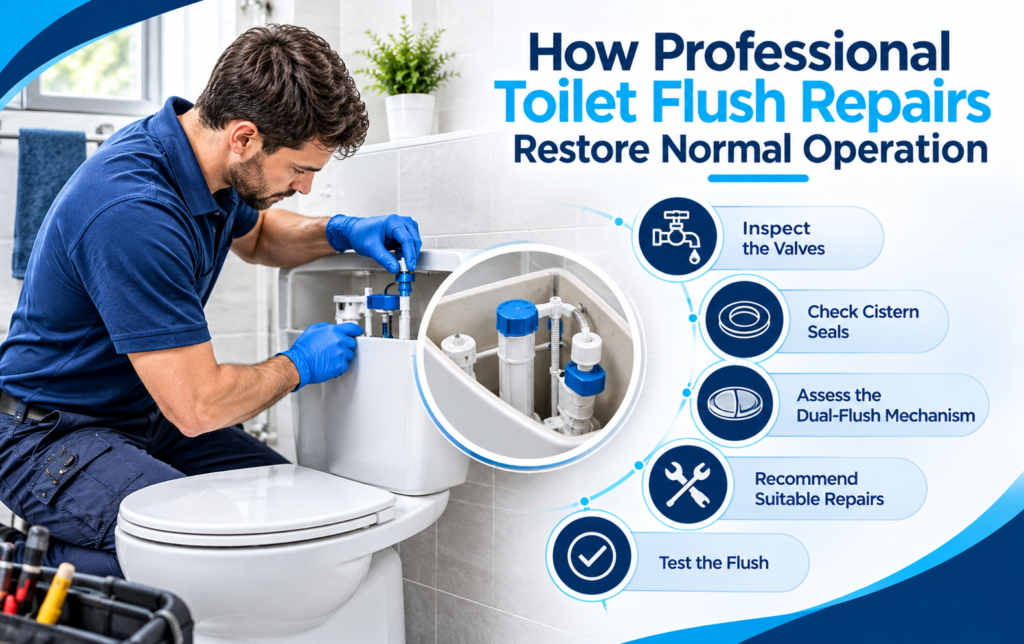
How Can Professional Toilet Flush Repairs Restore Normal Operation?
The right toilet repair process should start by analysing what is causing the problem. This helps the plumber to analyse the toilet flushing process in order to establish which of the parts needs fixing.
Here is how a licensed plumber approaches the repair process:
- Inspect the Valves: Check the inlet and outlet valves for faults affecting the flushing cycle.
- Check Cistern Seals: Look for worn or damaged seals that may cause water leakage.
- Assess the Dual-Flush Mechanism: Identify problems affecting the flush buttons or water release.
- Recommend Suitable Repairs: Explain the issue and suggest the necessary repair or component replacement.
- Test the Flush: Check wastewater flow and flush operation after completing the repair to ensure the toilet works correctly.
The Bottom Line
A weak flush, leaking cistern or wobbly toilet base can quickly turn into a daily annoyance. Whether you’re dealing with constantly running water, cracked ceramic pans or faulty dual-flush mechanisms, Same Day Home Services can help.
Our team also repairs leaking pan seals and works with major toilet brands, including Caroma, Geberit and Kohler. With years of experience and licensed, insured technicians, you can expect professional attention.
Need a professional toilet repair in Lidcombe? Call us at 1800 700 262 or request your quote today!
Frequently Asked Questions
1. Why is my toilet flush weak?
A faulty inlet valve, outlet valve or dual-flush mechanism may affect flushing performance.
2. Can a faulty cistern seal cause water leakage?
Yes. Worn or damaged seals can allow water to leak continuously into the toilet bowl.
3. When should I call a toilet repair plumber?
If weak flushing, constant running water or leaks keep recurring, arrange a professional inspection.